Picture a crowd that looks like a concert but behaves like a satsang. Thousands of young people sing devotional songs backed by modern instruments, with phone lights swaying instead of lighters, no alcohol and a lot of shared joy. This is bhajan clubbing, and it is one of the clearest signs that Gen Z spirituality is not only private. Alongside it, sound healing gatherings, community meditation circles and wellness festivals are creating new places to belong.
This article explains what bhajan clubbing is, why it has taken off, what other community formats are growing, and how to find or start a gathering of your own.
What is bhajan clubbing?
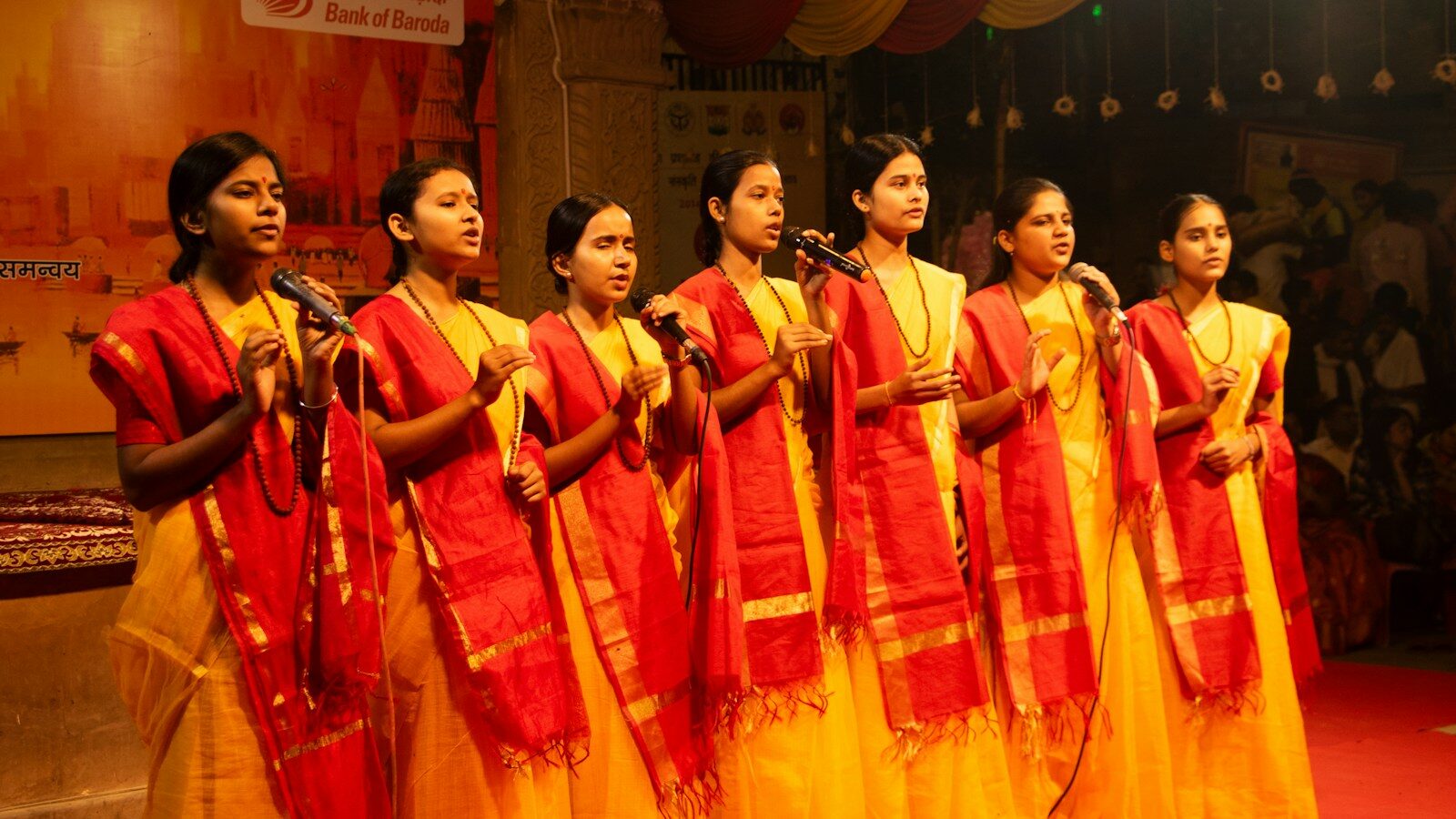
Bhajan clubbing is a live music format where devotional songs, often bhajans and kirtans, are performed with contemporary instruments and production in a club or concert-style setting. The atmosphere is energetic and social, yet the focus stays on devotion, singing along and togetherness. Many events are alcohol-free by design.
A scale example: in March 2026, AFP reported one such event that drew around 7,000 people to Delhi’s 16th-century Purana Qila. The festival organiser, a 26-year-old, said the goal was for young people to be high on spirituality, not spirits.
The movement has also produced its own stories. The Inner Path has profiled a pair of siblings who left stock trading to build their lives around bhajan gatherings, and a large Gurbani meditation event in Chandigarh where more than 10,000 people sat together in silence.
Why spiritual community is growing
1. Belonging matters more than doctrine. For many younger participants the attraction is not a set of beliefs. It is the feeling of being part of something with other people.
2. A reaction to digital life. After years of online living, people want real rooms, real voices and real faces. The Harris Poll found that 60% of Gen Z agree they belong to more in-person communities than before.
3. Lower pressure. A concert-style event does not demand that you know the rituals, wear certain clothes or prove your faith. You can arrive as you are.
4. An alternative to nightlife. Many young people want a social outing that leaves them feeling uplifted instead of drained. A devotional night out offers music and friendship without the hangover.
5. Emotional release. Singing together, particularly repeated simple phrases, can be deeply moving. Many attendees describe feeling lighter afterwards.
Other community formats on the rise
| Format | What happens | Who it suits |
|---|---|---|
| Bhajan or kirtan nights | Group singing with live instruments | People who love music and devotion |
| Sound healing gatherings | Lying or sitting while bowls, gongs or voices create sound | Those seeking deep relaxation |
| Community meditation circles | Group sits and meditates, often with a short talk | Beginners and regular practitioners |
| Conscious music events | Music paired with mindfulness or breathwork | People who prefer a festival feel |
| Wellness festivals | Workshops, yoga, talks and food over a day or weekend | Those who want variety |
| Satsang and study groups | Discussion of texts and teachings | People who want depth and conversation |
Spirituality is becoming social again
One of the quiet shifts of the last few years is that spiritual life is becoming less private and more socially expressive, though in a very different format from earlier generations. Where past generations might have gathered in temples, gurudwaras, churches or mosques at fixed times, younger people are building gatherings around music, mindfulness and friendship. They are often open to people of all backgrounds.
This is not necessarily a rejection of tradition. Many events borrow directly from it, using familiar songs, texts and rituals. They simply present them in a way that feels welcoming to a new audience.
Benefits and cautions
Benefits. Community events reduce loneliness, make practice feel joyful and introduce people to traditions they might otherwise have never encountered. They also give creators, musicians and organisers a way to earn a living from meaningful work.
Cautions.
- Respect. Devotional songs are sacred to many people. Participants and performers should treat the lyrics and context with care.
- Crowd safety. Large gatherings need proper exits, water, medical help and crowd management. Check these before buying tickets.
- Commercialisation. When ticket prices rise and branding takes over, the spirit can get lost. Look for events that explain their purpose.
- Depth. A great night out is not the same as a lasting practice. Use it as an entry point and keep learning.
How to find or start a spiritual community event
To find one:
- Search for bhajan, kirtan, sound healing or meditation events in your city on event platforms and social media.
- Follow local yoga studios, cultural centres and temples, which often host open sessions.
- Ask friends. Word of mouth drives much of the growth.
- Start with a free or low-cost event before you buy an expensive ticket.
To start one:
- Begin small. Invite ten friends for a one-hour meditation or singing session at home.
- Set a simple format. A short opening, a shared practice and a few minutes of quiet or conversation works well.
- Choose a welcoming space. A park, a rooftop, a studio or a community hall all work.
- Keep it inclusive. Explain what will happen so newcomers feel comfortable.
- Repeat it. A regular day and time builds a community faster than a one-off event.
Frequently asked questions
What is bhajan clubbing? It is a concert-style gathering where devotional songs are performed with modern instruments, usually in an alcohol-free, social atmosphere.
Why is bhajan clubbing popular with young people? It combines music, friendship and spirituality in a relaxed setting, and it offers belonging without strict rules.
Do I need to be religious to attend? No. Many attendees come for the music and community, and the atmosphere is usually welcoming to people of different backgrounds.
Are sound healing events safe? For most people they are relaxing, but if you have a medical condition such as epilepsy or a hearing issue, ask the organiser and your doctor first.
Conclusion
The rise of bhajan clubbing and similar gatherings shows that Gen Z is not only looking inward. Young people want to feel connected, to sing together, sit together and share meaning in person. Whether you join an event, attend a meditation circle or start a small group with friends, community can turn a private habit into something shared and lasting.
Related reading: Spiritual travel and retreats · Personalized spirituality
Sources: AFP via Malay Mail; Harris Poll via IBTimes Australia; The Inner Path: Backstage Siblings; The Inner Path: Rishab Rikhiram’s Gurbani meditation; The Inner Path: Gen Z spirituality.
Join DharmGhar Family