What Are the Seven Chakras?
The seven chakras are traditionally described as subtle energy centers associated with the human body in several Indian spiritual and yogic traditions. The Sanskrit word chakra (चक्र) literally means “wheel” or “disc.”
In traditional yoga and Tantra, chakras are understood as part of a subtle-body system used to describe different aspects of consciousness, spiritual development, meditation, and inner experience.
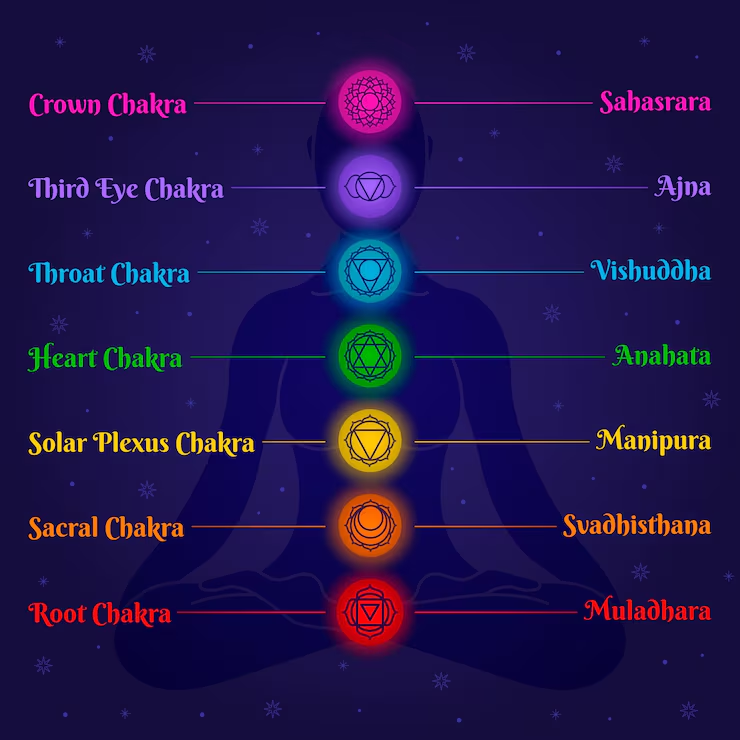
The commonly discussed seven chakras are:
- Muladhara Chakra – Root Chakra
- Svadhisthana Chakra – Sacral Chakra
- Manipura Chakra – Solar Plexus Chakra
- Anahata Chakra – Heart Chakra
- Vishuddha Chakra – Throat Chakra
- Ajna Chakra – Third Eye Chakra
- Sahasrara Chakra – Crown Chakra
These seven chakras are often represented as a vertical sequence from the base of the spine toward the crown of the head.
It is important to understand that modern popular descriptions of chakras often combine traditional Indian concepts with later interpretations from yoga, New Age spirituality, psychology, and Western wellness practices. Therefore, meanings and practices can differ between traditions.
The Seven Chakras at a Glance
| Chakra | Sanskrit Name | Common Name | Traditional Location | Commonly Associated Element |
|---|---|---|---|---|
| 1 | Muladhara | Root Chakra | Base of the spine | Earth |
| 2 | Svadhisthana | Sacral Chakra | Lower abdomen | Water |
| 3 | Manipura | Solar Plexus Chakra | Navel/abdomen | Fire |
| 4 | Anahata | Heart Chakra | Heart/chest region | Air |
| 5 | Vishuddha | Throat Chakra | Throat | Ether/Space |
| 6 | Ajna | Third Eye Chakra | Between the eyebrows | Mind/subtle principle |
| 7 | Sahasrara | Crown Chakra | Crown of the head | Beyond the five elements |
1. Muladhara Chakra – The Root Chakra
Sanskrit: मूलाधार (Mūlādhāra)
Meaning: Root support
Location: Base of the spine/perineal region
Element traditionally associated: Earth
Bīja mantra: Lam
Muladhara Chakra is traditionally regarded as the foundation of the chakra system.
The Sanskrit name Muladhara can be understood as “root support,” from mula meaning root and adhara meaning support or foundation.
In traditional interpretations, Muladhara is associated with grounding, stability, embodiment, and the foundational aspects of human existence.
Spiritual significance of Muladhara
Practices associated with Muladhara may focus on:
- Grounding
- Stability
- Awareness of the physical body
- Discipline
- Security
- Connection with the earth
- Establishing a foundation for spiritual practice
In popular chakra systems, the root chakra is frequently represented by the color red.
Muladhara Chakra Meditation
A simple meditation can involve sitting comfortably, bringing attention to the base of the body, and practicing slow, steady breathing.
Some traditions also use the bīja mantra “Lam” during meditation.
The purpose is not necessarily to force an unusual experience but to develop steadiness, awareness, and concentration.
2. Svadhisthana Chakra – The Sacral Chakra
Sanskrit: स्वाधिष्ठान (Svādhiṣṭhāna)
Meaning: One’s own abode
Location: Lower abdominal/pelvic region
Element traditionally associated: Water
Bīja mantra: Vam
The second chakra is known as Svadhisthana Chakra.
The Sanskrit term Svadhisthana is often interpreted in relation to one’s own abode or dwelling place.
Traditional and modern interpretations associate this chakra with emotions, creativity, desire, relationships, and the movement of life.
Spiritual significance of Svadhisthana
The chakra is commonly associated with:
- Creativity
- Emotional awareness
- Sensitivity
- Desire
- Relationships
- Adaptability
- Enjoyment of life
Water is traditionally associated with Svadhisthana because of its symbolic connection with movement and fluidity.
Its commonly used color in modern chakra systems is orange.
Svadhisthana Meditation
During meditation, practitioners may bring gentle attention to the lower abdomen and observe thoughts and emotions without immediately reacting to them.
The bīja mantra traditionally associated with this chakra is Vam.
3. Manipura Chakra – The Solar Plexus Chakra
Sanskrit: मणिपूर (Maṇipūra)
Meaning: City of jewels
Location: Navel/abdomen region
Element traditionally associated: Fire
Bīja mantra: Ram
The third chakra is called Manipura Chakra.
The name Manipura is commonly translated as “city of jewels.”
Fire is traditionally associated with Manipura, giving this chakra a symbolic relationship with transformation, energy, and inner power.
Spiritual significance of Manipura
Manipura is commonly associated with:
- Willpower
- Determination
- Discipline
- Transformation
- Confidence
- Personal agency
- Inner strength
Modern chakra teachings often connect Manipura with the color yellow.
Manipura Chakra Meditation
One approach is to sit comfortably and bring awareness to the area around the navel.
Slow breathing can be combined with attention to the sensation of warmth and energy in the abdomen.
The traditional bīja mantra is Ram.
4. Anahata Chakra – The Heart Chakra
Sanskrit: अनाहत (Anāhata)
Meaning: Unstruck or unbeaten
Location: Heart/chest region
Element traditionally associated: Air
Bīja mantra: Yam
Anahata Chakra is commonly called the Heart Chakra.
The Sanskrit word Anahata is often translated as “unstruck,” referring to a sound that is not produced by the striking of two physical objects.
Anahata occupies a central position in the commonly described seven-chakra system.
Spiritual significance of Anahata
It is traditionally associated with qualities such as:
- Compassion
- Love
- Devotion
- Forgiveness
- Equanimity
- Connection
- Inner openness
Air is the traditional element associated with Anahata.
Modern chakra systems commonly represent it with the color green.
Anahata Meditation
During meditation, you can gently bring attention to the chest area while observing the breath.
Rather than trying to create a particular emotional experience, simply observe sensations, thoughts, and feelings with awareness.
The bīja mantra associated with Anahata is Yam.
5. Vishuddha Chakra – The Throat Chakra
Sanskrit: विशुद्ध (Viśuddha)
Meaning: Especially pure / purification
Location: Throat region
Element traditionally associated: Ether or space
Bīja mantra: Ham
The fifth chakra is called Vishuddha Chakra.
The Sanskrit term Vishuddha is associated with purification.
Vishuddha is commonly connected with communication, expression, listening, and the relationship between inner experience and spoken words.
Spiritual significance of Vishuddha
Common associations include:
- Communication
- Truthfulness
- Self-expression
- Listening
- Clarity
- Mantra practice
- Purification
Modern chakra teachings usually associate Vishuddha with the color blue.
Vishuddha Meditation
A simple practice is to sit quietly and pay attention to the breath and sensations around the throat.
You can also practice mantra repetition.
The traditional bīja mantra associated with Vishuddha is Ham.
6. Ajna Chakra – The Third Eye Chakra
Sanskrit: आज्ञा (Ājñā)
Meaning: Command, authority, or perception
Location: Traditionally associated with the region between the eyebrows
Bīja mantra: Om/Aum in many modern practices
Ajna Chakra is commonly known as the Third Eye Chakra.
Ajna has an important place in yogic and Tantric traditions and is often associated with awareness, concentration, insight, and inner perception.
The word Ajna is related to meanings such as command or instruction.
Spiritual significance of Ajna
Ajna is commonly associated with:
- Concentration
- Intuition
- Inner awareness
- Discernment
- Meditation
- Contemplation
- Insight
Modern chakra systems often represent Ajna using the color indigo.
Ajna Chakra and Meditation
Many meditation practices involve focusing attention around the space between the eyebrows.
However, it is not necessary to strain the eyes or physically force attention onto the area.
A gentle approach is to close the eyes, relax the facial muscles, breathe naturally, and observe whatever arises in awareness.
Some traditions use Om/Aum as part of meditation and mantra practice.
7. Sahasrara Chakra – The Crown Chakra
Sanskrit: सहस्रार (Sahasrāra)
Meaning: Thousand-petalled
Location: Crown of the head
Traditional association: Beyond the five elements
The seventh chakra is commonly called Sahasrara, or the Crown Chakra.
Sahasrara refers to “thousand,” and the chakra is traditionally represented through the imagery of a thousand-petalled lotus.
Sahasrara is associated with higher states of consciousness and spiritual realization in many modern presentations of the chakra system.
Spiritual significance of Sahasrara
Common associations include:
- Spiritual awareness
- Contemplation
- Liberation
- Transcendence
- Unity
- Self-realization
- Connection with the Divine
Unlike the first five chakras, Sahasrara is generally not assigned one of the five gross elements.
It is often represented using violet, white, or golden-white imagery in modern chakra systems.
Seven Chakras and Their Bīja Mantras
Mantra practice is an important part of many Indian spiritual traditions.
The commonly associated bīja mantras are:
| Chakra | Bīja Mantra |
|---|---|
| Muladhara | Lam |
| Svadhisthana | Vam |
| Manipura | Ram |
| Anahata | Yam |
| Vishuddha | Ham |
| Ajna | Om/Aum* |
| Sahasrara | Traditionally treated differently from the six lower chakra bījas |
*Associations vary among texts and traditions. Modern chakra guides do not always represent the historical traditions consistently.
Seven Chakras and Their Colors
You will often see the seven chakras represented using the colors of the rainbow:
Muladhara → Red
Svadhisthana → Orange
Manipura → Yellow
Anahata → Green
Vishuddha → Blue
Ajna → Indigo
Sahasrara → Violet/White
This color system is extremely common in modern yoga and wellness material.
However, it is useful to distinguish this modern presentation from historical Indian texts. The association of each chakra with the familiar rainbow sequence is not a simple universal rule found identically across all traditional sources.
The Seven Chakras and the Five Elements
One of the interesting aspects of traditional Indian thought is the relationship between the lower chakras and the five great elements (Pancha Mahabhutas).
These are:
- Prithvi – Earth
- Apas/Jala – Water
- Agni/Tejas – Fire
- Vayu – Air
- Akasha – Space/Ether
A commonly presented correspondence is:
Muladhara → Earth
Svadhisthana → Water
Manipura → Fire
Anahata → Air
Vishuddha → Space/Ether
Ajna and Sahasrara are generally treated differently from this five-element sequence.
Chakras and Kundalini
The seven chakras are frequently discussed together with Kundalini.
In certain yogic and Tantric traditions, Kundalini is described symbolically as a latent spiritual power associated with the base of the subtle body.
Traditional practices describe the movement or awakening of Kundalini through the chakra system.
The central channel is commonly called Sushumna Nadi, with Ida and Pingala described as two other important subtle channels.
A simplified representation is:
Muladhara → Svadhisthana → Manipura → Anahata → Vishuddha → Ajna → Sahasrara
Kundalini practices can be complex and traditionally involve more than simply concentrating on individual chakras. They may include:
- Asana
- Pranayama
- Mantra
- Mudra
- Meditation
- Bandha
- Guru-guided practice
Therefore, advanced Kundalini practices should be approached carefully and preferably studied within a qualified traditional framework.
Are Chakras Real?
This is one of the most common questions beginners ask.
The answer depends on what is meant by “real.”
Chakras are real as concepts within particular Indian religious, yogic, and Tantric traditions. They form part of traditional models of the subtle body and consciousness.
However, chakras should not simply be equated with physical organs, glands, nerves, or anatomical structures.
Modern scientific medicine does not recognize the seven chakras as physical anatomical structures in the human body.
At the same time, meditation and yoga practices associated with spiritual traditions can have subjective, psychological, and physiological effects. Those effects should not automatically be interpreted as scientific proof of chakras themselves.
This distinction allows us to appreciate the spiritual tradition without confusing it with modern anatomy.
How to Balance the Seven Chakras
The phrase “chakra balancing” is widely used today, but different teachers use it in different ways.
Traditional spiritual practices that may involve contemplation of chakras include:
1. Meditation
Regular meditation can cultivate concentration and awareness.
2. Mantra Japa
Repeating a mantra with attention is a longstanding practice in Indian spiritual traditions.
3. Pranayama
Traditional breath practices can be incorporated into a broader yogic discipline.
4. Yoga Asana
Physical yoga postures can support concentration and bodily awareness.
5. Self-Reflection
Observing one’s thoughts, emotions, habits, and reactions can become part of spiritual practice.
6. Devotion
Bhakti and devotion to one’s chosen form of the Divine are important paths within Hindu spiritual traditions.
7. Ethical Living
Yogic traditions emphasize disciplines and ethical principles rather than treating spirituality as simply an energy-management technique.
A Simple Seven-Chakra Meditation for Beginners
If you are new to chakra meditation, you do not need complicated techniques.
Try this simple practice:
Step 1 – Sit Comfortably
Sit in a comfortable position with your spine naturally upright.
Step 2 – Relax
Close your eyes and take several slow, comfortable breaths.
Step 3 – Bring Awareness to the Body
Start from the base of the body and gradually move your attention upward.
Step 4 – Observe Each Chakra
Spend a short amount of time contemplating each traditional chakra:
Muladhara: Grounding and stability
Svadhisthana: Flow and emotional awareness
Manipura: Discipline and transformation
Anahata: Compassion and openness
Vishuddha: Expression and clarity
Ajna: Awareness and concentration
Sahasrara: Spiritual contemplation
Step 5 – Mantra
If appropriate for your practice, you may mentally repeat the corresponding bīja mantra.
Step 6 – Finish Quietly
After moving through the seven centers, sit quietly for a few minutes.
Do not try to force visions, lights, sensations, or other unusual experiences.
The goal of meditation is not necessarily to experience something extraordinary. Consistent awareness and inner steadiness can themselves be meaningful aspects of practice.
Seven Chakras in Hinduism
It is important to understand that Hinduism does not have only one universal chakra system.
Different Hindu, yogic, and Tantric traditions describe subtle-body systems in different ways.
The popular seven-chakra model is now widespread throughout the world, but historical Sanskrit sources contain multiple chakra systems, sometimes describing different numbers of chakras and different correspondences.
For this reason, statements such as “Hinduism says there are exactly seven chakras” are an oversimplification.
The seven-chakra model is one important and widely known framework, but it is not the only traditional model.
Chakras, Nadis and the Subtle Body
The chakra system is traditionally discussed within the broader concept of the subtle body.
Three important nadis frequently discussed in yogic literature are:
Ida Nadi
Often associated symbolically with the lunar principle.
Pingala Nadi
Often associated symbolically with the solar principle.
Sushumna Nadi
Described as the central channel through which Kundalini is traditionally said to ascend.
The chakras are generally described in relation to these subtle channels rather than as physical tubes or anatomical structures.
What Happens When a Chakra Is “Blocked”?
The expression “blocked chakra” is extremely common in modern spiritual and wellness communities.
It is often used metaphorically to describe feelings such as:
- Fear
- Emotional difficulty
- Lack of confidence
- Difficulty communicating
- Lack of focus
- Feeling disconnected spiritually
However, there is no universally accepted medical test that can diagnose a “blocked chakra.”
Therefore, chakra language can be useful as a spiritual framework for self-reflection, but it should not replace medical or psychological diagnosis when someone has a health concern.
Can You Open All Seven Chakras?
In popular spiritual culture, people often speak about “opening the chakras.”
Traditional yogic and Tantric teachings can describe spiritual development in much more nuanced terms.
Rather than treating chakras like switches that can simply be turned on, traditional practice may involve gradual cultivation of:
- Concentration
- Purity
- Discipline
- Breath control
- Meditation
- Mantra
- Devotion
- Self-knowledge
The deeper purpose of yogic spirituality is not simply to collect unusual experiences but to transform one’s relationship with the mind, self, and ultimate reality.
Seven Chakras and the Journey Within
The chakra system can be understood as a symbolic map of inner development.
Beginning with Muladhara, the journey can be contemplated as moving from grounding and embodiment toward increasingly subtle dimensions of awareness.
The sequence culminates symbolically in Sahasrara, associated with spiritual realization and transcendence.
However, this should not be understood as a simplistic ladder where one chakra is “better” than another.
Each chakra has its own symbolic role within the system.
Frequently Asked Questions About the Seven Chakras
How many chakras are there?
The number depends on the tradition. The seven-chakra system is the most widely known modern model, but traditional Indian texts describe other chakra systems as well.
What are the 7 chakras?
The seven commonly discussed chakras are Muladhara, Svadhisthana, Manipura, Anahata, Vishuddha, Ajna, and Sahasrara.
What is the first chakra?
The first chakra is Muladhara Chakra, commonly known as the Root Chakra.
What is the third eye chakra?
The Ajna Chakra is commonly called the Third Eye Chakra and is associated with the region between the eyebrows.
What is the crown chakra?
Sahasrara is commonly called the Crown Chakra and is traditionally represented as a thousand-petalled lotus.
Which chakra is associated with love?
The Anahata Chakra, or Heart Chakra, is commonly associated with love, compassion, devotion, and openness.
Which chakra is associated with communication?
Vishuddha Chakra, commonly called the Throat Chakra, is associated with communication and expression.
What is Kundalini?
Kundalini is a concept found in certain yogic and Tantric traditions, where it is described as a latent spiritual power associated with the subtle body.
Can meditation activate chakras?
Meditation practices can involve contemplation of chakras, mantras, breath, and subtle-body concepts. Different traditions understand the purpose and effects of these practices differently.
Are chakras scientifically proven?
Chakras are traditional spiritual concepts rather than recognized anatomical structures in modern medicine. Scientific evidence about meditation or yoga should not be treated as proof that chakras exist as physical structures.
Final Thoughts
The seven chakras provide a fascinating framework for exploring consciousness, meditation, yoga, mantra, and spiritual practice.
The seven commonly discussed centers are:
Muladhara – Foundation
Svadhisthana – Flow
Manipura – Transformation
Anahata – Compassion
Vishuddha – Expression
Ajna – Awareness
Sahasrara – Spiritual realization
Whether you approach chakras through yoga, meditation, Tantra, Hindu philosophy, or personal spiritual exploration, it is helpful to study the traditional sources and understand that different lineages may explain the chakra system differently.
The chakra system is ultimately more than a collection of colorful symbols. Within the traditions that use it, it forms part of a much broader exploration of the body, mind, consciousness, and the possibility of spiritual realization.
Suggested Further Reading
If you are beginning your spiritual journey, you may also explore:
- What is Kundalini?
- What are Nadis?
- What is Sushumna Nadi?
- What is the Third Eye?
- What is Ajna Chakra?
- What is Meditation?
- What is Mantra Japa?
- What is Om (Aum)?
- What is the meaning of Yoga?
- Understanding Hindu Spirituality
Join DharmGhar Family